Hail claims and what Colorado law actually requires
Colorado wrote a statute about roofing contracts because enough people were taken advantage of after storms. Knowing three of its provisions puts you ahead of most homeowners.
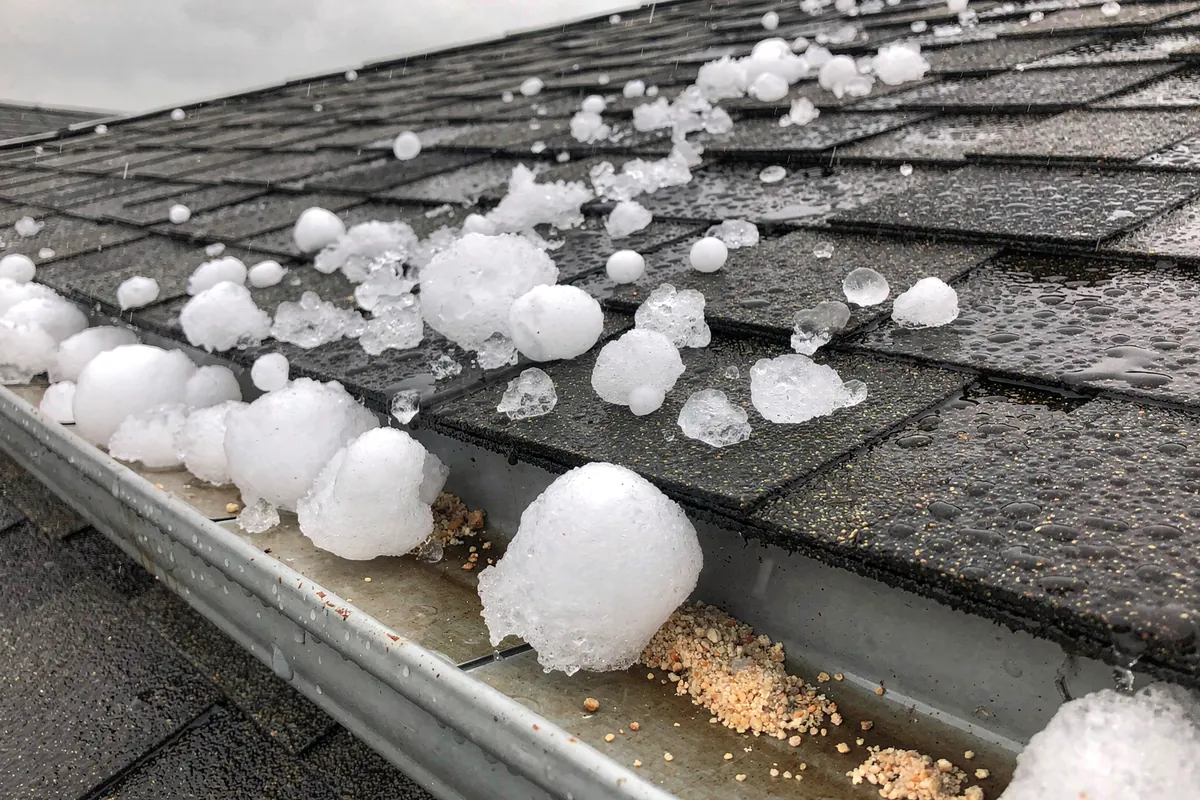
Colorado has something most states do not: a statute written specifically about residential roofing contracts. It exists because the Front Range gets hammered by hail every year, and where there is that much insurance money moving quickly there are people who will take advantage of it.
Three of its provisions are worth knowing before you speak to anybody.
One. The contract has to be a contract
A residential roofing contract in Colorado has to be in writing and has to contain specified information, including the contractor’s details and the scope and cost of the work.
A quote scribbled on a business card and a handshake is not that. Neither is a one line “replace roof, insurance proceeds” agreement, which is the form a rushed post storm contract usually takes.
Two. You can cancel if the claim is denied
If your insurer denies the claim in whole or in part, Colorado law gives you the right to cancel the roofing contract within 72 hours of being notified. The contractor has to return your payments, other than for work actually done or materials actually ordered.
This matters because the classic post storm bind is signing a contract contingent on a claim, having the claim denied, and discovering you have committed to a roof you now have to pay for yourself.
Three. Two things they cannot do
They cannot pay, waive, rebate or promise to absorb your deductible. It is the offer people most want to accept and it is specifically prohibited.
They cannot negotiate the claim for you unless appropriately licensed to do so. A roofer offering to “handle everything with the insurance company” is describing a job the statute does not permit them to do on a roof they are also selling.
All checked September 2026, and none of this is legal advice. If a contract has already been signed and gone wrong, that is a lawyer’s question rather than a roofer’s.
What good hail documentation looks like
Photographs per elevation, with a chalk circle and something for scale in frame. Not four wide shots of a roof.
A count of impacts per test square, because that is the language an adjuster works in.
Soft metal evidence. Gutters, downspouts, vent caps and flashing record hail far more honestly than shingles do. If the soft metal is dimpled, the roof took hits.
The storm date being claimed. “Sometime this spring” is a materially weaker claim than a date.
The money
Most wind and hail policies in Colorado carry a percentage deductible rather than a flat one. One or two percent of the dwelling limit is common, which on a $350,000 limit is $3,500 to $7,000. Read the declarations page before deciding whether a claim is worth filing.
Most policies also pay in two stages: actual cash value first, with withheld depreciation released once the work is completed and invoiced. A contractor demanding the full replacement cost up front is asking for money the insurer has not released.
Questions people ask
- I cannot see damage from the ground. Does that mean there is none?
No. Functional hail damage on asphalt is bruising, where the impact fractures the mat beneath the granules without breaking the surface. It is invisible from the driveway and it opens up over the following few years, usually after the claim window has closed.
- My neighbour is getting a new roof. Should I file?
Get it looked at, then decide. Hail falls in narrow bands and it is entirely normal for one side of a street to be hit and the other missed. What your neighbour got is a reason to look, not an answer.
- What if my insurer denies it?
Colorado’s roofing statute gives you a right to cancel the roofing contract within 72 hours of being told the insurer has denied the claim in whole or in part. That right exists precisely so you are not left holding a contract for work nobody is paying for.
- Should I use the contractor my insurer recommends?
You do not have to. You choose who does the work. The insurer can recommend, and can dispute scope or price, but the contract is yours.